Pharma
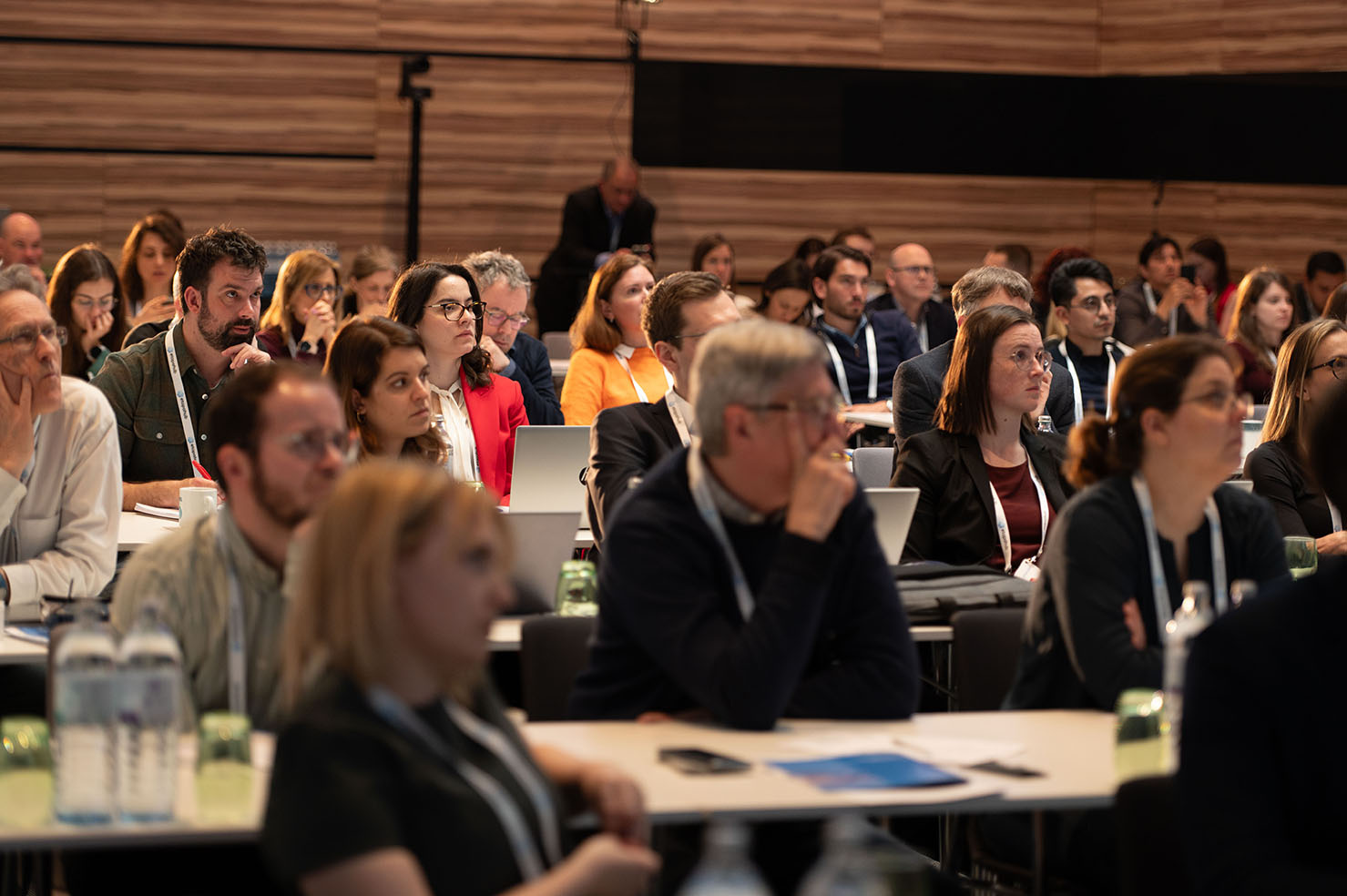
The 11th Impurities: Genotoxic, Nitrosamine & Beyond Summit (#Egenotoxic 2027) is a leading event for pharmaceutical impurity control, bringing together experts, regulators, and industry leaders. Focused on nitrosamines, genotoxic impurities (GTIs), and science-based risk management, it provides practical insights into regulatory expectations, submissions, and inspection readiness.
Held on April 7–9, 2027 in Vienna, the summit will address emerging nitrosamine risks, NDSRIs, AI-supported toxicology, advanced analytics, data-driven impurity strategies, and the growing role of extractables and leachables (E&L) in product safety and compliance.
Read more
The discovery of nitrosamine contamination, beginning with the valsartan case, fundamentally reshaped pharmaceutical impurity control. What started as a reactive crisis has now evolved into a continuous, lifecycle-driven challenge requiring deep scientific understanding and cross-functional alignment.
Today, nitrosamines - particularly nitrosamine drug substance-related impurities (NDSRIs) - remain a critical focus, driven by:
The industry has moved beyond isolated recalls toward proactive, mechanism-based risk assessment and control strategies.
Regulatory expectations from FDA, EMA, and global authorities continue to intensify, with a clear shift toward:
Updates to ICH M7 (R2) and Q3D frameworks now require companies to embed impurity control directly into CMC strategy, spanning:
Success increasingly depends on cross-functional collaboration between CMC, toxicology, analytical, and regulatory teams - ensuring alignment from development through submission and commercialization.
As the field evolves, impurity control now extends far beyond traditional nitrosamine focus. At #Egenotoxic 2027, key areas include:
The summit reflects a broader reality: impurity control is now a system-level challenge, not a single-discipline task.
The next phase of impurity control is driven by technology and data. Industry leaders are adopting:
These innovations are transforming impurity control from reactive testing into predictive, design-driven decision-making.
Secure your place and position your organization for success in an increasingly complex regulatory landscape.
Participants at #Egenotoxic 2027 will receive a digital certificate of attendance.
Chief Executives, Vice Presidents, Directors, Heads, Leaders, and Managers specializing in:
Pharmaceutical Development & Chemistry
Analytical & Laboratory Sciences
Impurities & Toxicology
Quality, Compliance & Regulatory
Emerging Technologies & Topics
The Early Bird Offer expires in 28 days!
To request an agenda for this Summit, please complete the details below. We will send you the agenda via email.
The Early Bird Offer expires in 28 days!
About Speaker
About Speaker
About Speaker
About Speaker
About Speaker
About Speaker
About Speaker
About Speaker
About Speaker
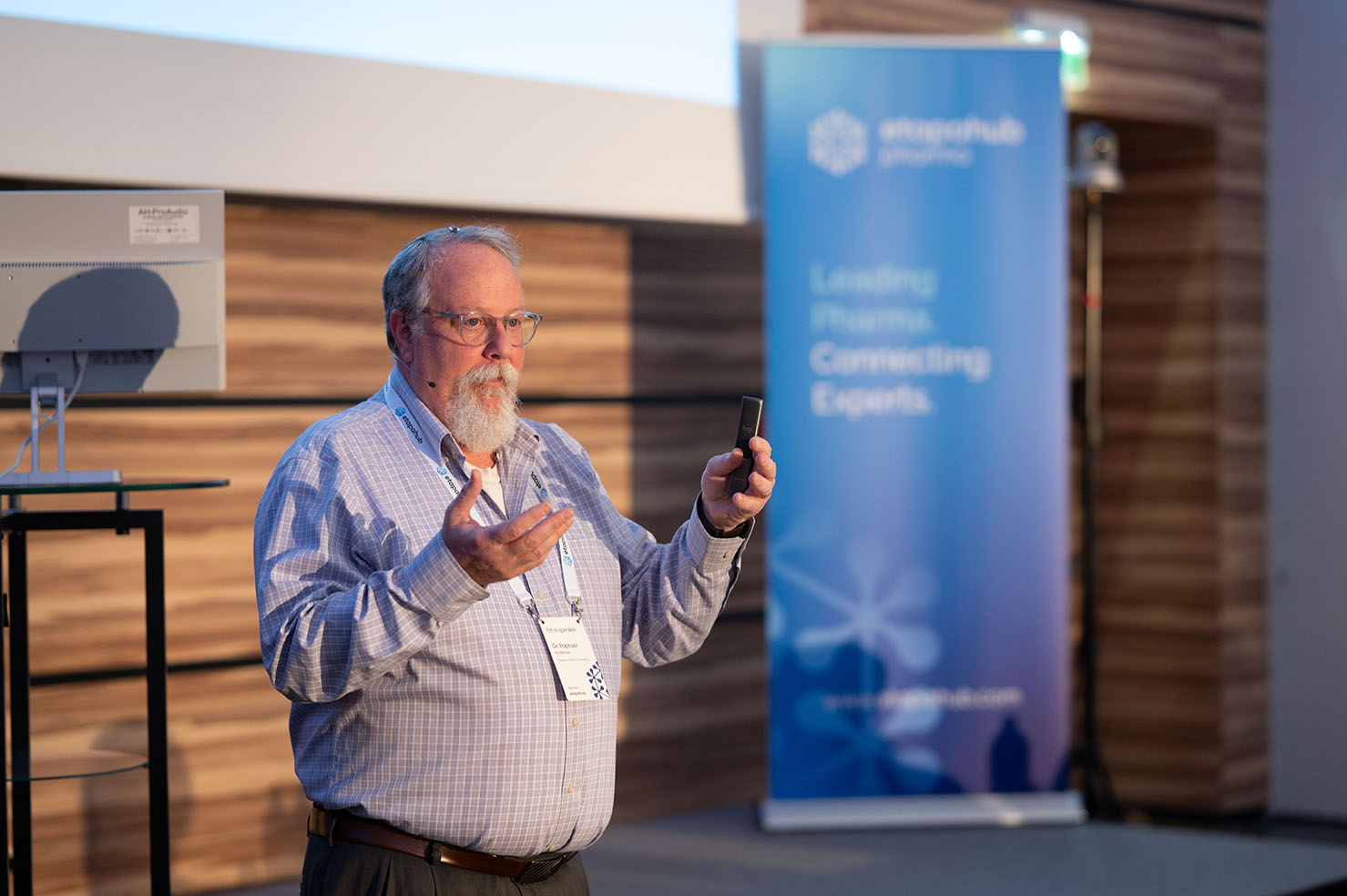
Raphael (Raphy) Nudelman is a chemical toxicologist with over 20 years of industry experience. He holds a PhD in organic chemistry from the Weizmann Institute of Science and completed postdoctoral research at the US Air Force Research Lab and Duke University Medical Center. At Teva Pharmaceutical Industries, Raphy held various roles, including in the medicinal chemistry department, the patent department, the non-clinical safety department, and as the Impurity Expert of the company. His expertise spans impurity and excipient qualification in drug substances and drug products, with a recent focus on risk assessment of nitrosamine impurities in pharmaceuticals. Raphy retired from Teva in September 2024 and founded Nudelman ChemTox Consulting, where he continues to provide consulting services in the pharmaceutical impurity qualification field.
Andrew Teasdale, PhD till recently was a senior principal scientist in impurity management and external advocacy at AstraZeneca. Andrew has over 20 years’ experience in the pharmaceutical industry as an analytical chemist and within quality assurance and regulatory roles. In his recent role, he was chairing AstraZeneca’s impurity advisory group. Andrew has published over 30 papers relating to genotoxic impurities and other impurity-related matters and has been a speaker at many international conferences. He has also led a number of industry expert groups; these include both safety and quality groups within Pharmaceutical Research and Manufacturers of America (PhRMA), European Federation of Pharmaceutical Industries and Associations (EFPIA), Product Quality Research Institute (PQRI), and the Extractables and Leachables Safety Information Exchange (ELSIE). Andrew led the recent development of the ICH M7 addendum table from an industry perspective and was the inventor of the purge tool concept, Mirabilis™. He also published a book addressing genotoxic impurities, ‘Genotoxic Impurities Strategies for Identification and Control,’ (Wiley and Son) and is soon to publish as editor a book focused on practical implementation of ICH quality guidelines.
Dr. Rodney Parsons earned his bachelor’s degree in chemistry in 1986 from Trinity College and then received his PhD in 1992 from the University of Vermont under the guidance of Professor Martin E. Kuehne. His doctoral studies were focussed on the development of novel routes for the construction of indole alkaloids. He then carried out postdoctoral studies in organic chemistry with Professor Clayton H. Heathcock at the University of California at Berkeley. In 1994 he became a research scientist at Dupont-Merck Pharmaceutical Co., where he eventually rose to the rank of director. In 2001, after the acquisition of the DuPont Pharmaceuticals Co., he joined Bristol-Myers Squibb, where he is currently an executive director in the chemical process development department. He has been involved with drug development programs in a number of therapeutic areas including virology, cardiovascular, oncology, and metabolic diseases. His research interests include pharmaceutical process R&D, asymmetric synthesis, heterocyclic chemistry, and natural products total synthesis. He has been the BMS Mutagenic Impurity Assessment Committee (MIAC) chair since 2006. On the MIAC he leads an R&D-wide committee to establish control strategies for mutagenic impurities and align BMS internal practices with the evolving health authority regulations. Most recently he has led the end-to-end nitrosamine assessment and control process for the organisation. He has published over 40 papers and multiple patents in these areas.
Olivier Dirat is Senior Director within Pfizer Global Regulatory Sciences CMC Advisory Office where he provides technical and regulatory guidance on a wide array of topics, including CMC regulatory strategies, the development and articulation of control strategies, impurities management, nitrosamines, continuous manufacturing, starting materials, ADCs, mRNA vaccine lipids and other special cases. External to Pfizer, Olivier is involved with ICH as co-rapporteur for ICH Q6 EWG (PhRMA) and was deputy topic lead for ICH Q13 IWG (PhRMA), IQ consortium Board of Directors and various working groups including Nitrosamines and EFPIA for CMC topics including Nitrosamines, ICH M7, and ICH Q6. He has co-authored over 40 publications and is a regular conference speaker. Olivier is based in Sandwich, UK.
Elisabeth is Head of Unit Quality Assessment for chemical Medicinal Products and IMPs at the Austrian National Competent Authority and holds a PhD in Pharmaceutical Chemistry. She is a regulatory professional with extensive expertise in pharmaceutical quality and regulatory frameworks.
In addition to her role at AGES, she actively contributes to international regulatory activities and serves as a European expert at the European Medicines Agency (EMA), where she is involved in all types of procedures, contributes to the drafting and revision of guidance documents (including the LALA cutaneous guideline), and provides training within the QWP curriculum for quality assessors. She is a member of EMA’s Combination Products Operational Group (COMBO).
In addition, she is an assessor for the chemical purity and microbiological quality evaluation within the EDQM certification procedure.
As a member of the ICH Q6(R1) Expert Working Group, representing the European Commission, Elisabeth leads the subgroup responsible for the chemical section.
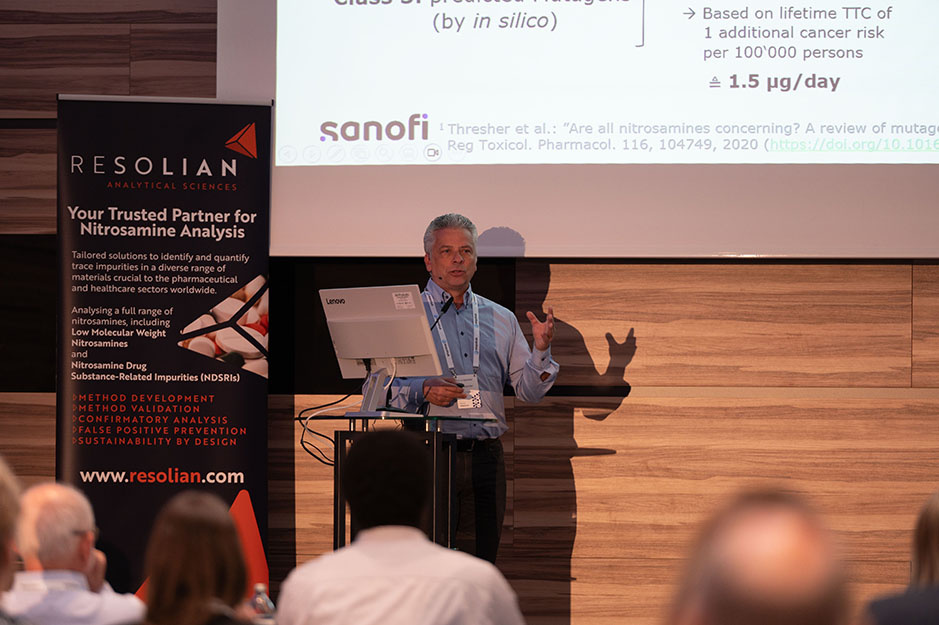
Alexander Amberg performed his doctoral studies at the department of toxicology and pharmacology at the University of Wuerzburg (Germany) and obtained his PhD in biochemical toxicology in 2000. In 2001, he joined Sanofi and is since that time responsible for in silico/computational toxicology analysis globally at Sanofi. Since 2007, he has been registered as a European Registered Toxicologist (ERT) after getting his examination of the Fachtoxikologe DGPT from the German Society of Toxicology. His major research interests are data management and digitalization of preclinical and clinical safety data and development of new in silico prediction systems for different toxicity endpoints from these data to support drug development in research and development. For this he is also a member of different internal expert advisory groups as well as external initiatives, like the eTRANSAFE consortium (for translational safety assessment and development of new in silico prediction systems), the VICT3R consortium (for replacing of control animals in a toxicity study by virtual control data) and with respect to genotoxic impurities and nitrosamine actively involved in different cross-company collaborations. With this expertise he is author of more than 60 publications in scientific literature.
Joerg Schlingemann is a director and principal expert for quality control systems within Merck KGaA’s/EMD Serono’s healthcare quality unit. He studied molecular biology in Uppsala and Heidelberg, where he completed a doctorate degree at the German Cancer Research Center in 2005.
He has 14 years of experience in the pharmaceutical industry from various roles within quality control and quality assurance. Since late 2019, Joerg has been leading EMD Serono’s analytical activities for N-nitrosamines, based on which he has authored or co-authored several scientific publications dealing with analytical challenges, NDMA in metformin, nitrite in excipients and the prevalence of NDSRIs. Joerg is an advocate of scientific collaboration, data sharing and expressive visualisation of data. He is married and has three children.
Dr. Susanne Glowienke graduated from the University of Stuttgart-Hohenheim, Germany, in food chemistry/technology. She then undertook research in the area of analytical chemistry and obtained her PhD degree from the faculty of food technology (cereal chemistry) in 1997 at the same university. In 2000, she joined Novartis in Basel, Switzerland, as a postdoc in the area of Q(SAR) for toxicological endpoints. Susanne was working as a lab head for bacterial mutagenesis in genetic toxicology, preclinical safety and is responsible for the QSAR predictions and impurity/excipient assessments at Novartis.
Currently, Susanne is a director in preclinical safety at Novartis, Basel, Switzerland. She held several positions at Novartis, including positions in genetic toxicology and QSAR modelling. She is currently head of the impurity safety group and as such responsible for contaminant issues including nitrosamines. Susanne is part of and has led a number of industry expert groups within DruSafe IQ (US), European Federation of Pharmaceutical Industries and Associations (EFPIA), the Extractables and Leachables Safety Information Exchange (ELSIE), and several data sharing initiatives.
Request the 11th Impurities: Genotoxic, Nitrosamine & Beyond Summit brochure and find out the latest topics and ideas that will be shared.
Please fill in your e-mail address below, and we will process your request shortly.
Please note that some of our emails may be marked as spam due to your company’s security settings. To ensure we stay in touch, you can also connect directly with Emma at [email protected].
Apr 21, 2025
9th Impurities: Genotoxic, Nitrosamine, & Beyond Summit | Vienna & Online | April 2025
Pharma
Pharma
Pharma
Pharma